

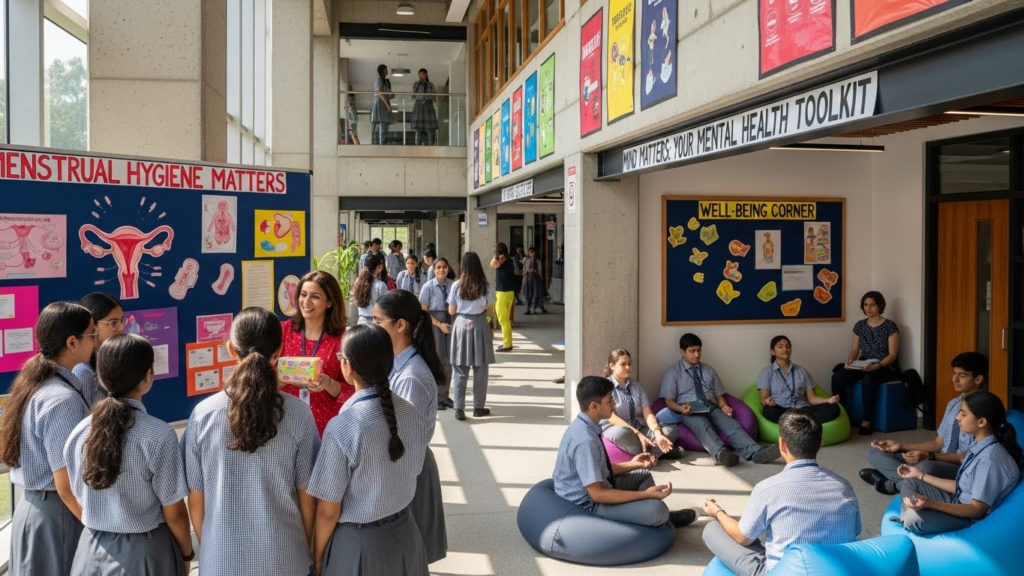
Chandigarh: In a proactive move to address the evolving health challenges faced by adolescents, the UT Health Department, in collaboration with local institutes, has intensified its outreach programs across government and private schools in the city. What began as a campaign focused on menstrual hygiene has now expanded to cover digital addiction, mental health, and lifestyle diseases.
A Holistic Approach to Adolescent Health
Dr. Suman Singh, Director of Health Services, explains that the department’s “Adolescent Clinic” is designed to tackle the immediate and modern issues plaguing teenagers today. The initiative has successfully covered 117 government schools and 21 private schools in Chandigarh.
According to Dr. Singh, while the program initially focused on menstrual hygiene, it has evolved to address:
- Digital Addiction: Identifying students who suffer from sleep deprivation due to late-night gaming.
- Substance Abuse: Education on the dangers of tobacco and other substances.
- Mental Health: Managing stress, anxiety, and emotional well-being, especially during Parent-Teacher Meetings (PTMs).
- Lifestyle Issues: Combatting junk food consumption and promoting physical activity.
Interactive Methods for Better Engagement
Moving away from traditional lecture-based formats, the health department is utilizing audio-visual aids, movie screenings, and interactive games to connect with students. The program employs a “peer educator” model, where two teachers and two students from each school are trained to carry the initiative forward.
“We found that groups of students caught napping in class were often involved in late-night gaming sessions. This was addressed through counseling,” Dr. Singh noted, highlighting the practical impact of these interventions.
‘Swasth Navyuva Swasth Bharat’ Initiative
Parallel to the UT Health Department’s efforts, the Homi Bhabha Cancer Hospital and Research Centre (HBCHRC) is running the ‘Swasth Navyuva Swasth Bharat’ school health program.
Dr. Vandita Pahwa from the Preventive Oncology Department shared the reach of their recent campaigns:
- Tobacco Awareness: Reached 3,412 students across 46 schools.
- Diet Awareness: Educated 1,523 students in 26 schools about healthy eating habits.
This program focuses on preventing non-communicable diseases by encouraging healthy lifestyles early in life. “The idea is to create healthy role models for future generations. The key is to start young, as it is at this age that habits are formed,” Dr. Pahwa emphasized.
Early Diagnosis and Screening
Apart from awareness, the initiative also facilitates early medical intervention. Teachers are encouraged to refer students who are lagging academically or physically to the Health Department. This has led to effective screening in OPDs for conditions like deafness, blindness, and congenital heart diseases, ensuring that health barriers do not hinder a child’s education.